About risk management
This topic explains how the platform provides risk management using risk models. It explains how the overall risk score is produced using risk factors and how the score sets the risk level of entities undergoing assessments.
Moody's for Compliance gives you a flexible way to assess risk across large, diverse datasets.
Each entity you assess is assigned a risk level. This risk level shows how much potential harm the entity could pose to your organization. The level is driven by an overall risk score calculated by the active risk model.
A risk model is made up of specified risk factors. Common examples of risk factors include age, nationality, and PEP status. Each risk factor has a numeric score that reflects its impact. Higher scores mean higher perceived risk. During an assessment, the platform uses the available data to calculate an overall risk score. That score falls into a predefined range, which determines the final risk level.
An assessment's risk level can change throughout the course of onboarding and monitoring. The risk model is re-applied any time entity details used in the risk model change, for example, when the individual's birthday is reached and their age changes.
The risk model also defines how risk factor scores are combined. This is known as the scoring rule. Typical rules include adding all factor scores, taking the highest risk factor score, or calculating an average.
Risk model assessments
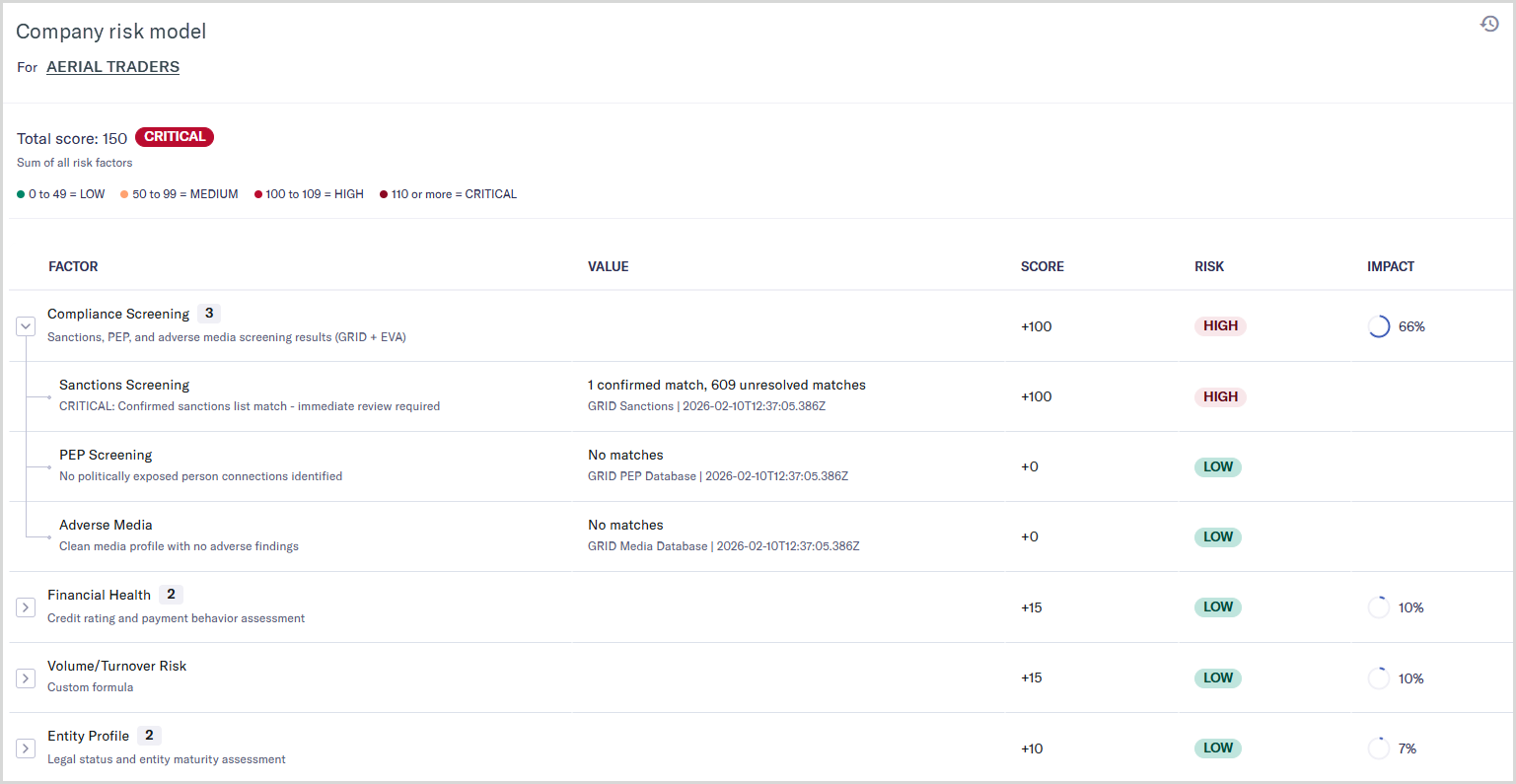
The Risk view shows the risk model assessments for entities in your portfolio. Use these views to spot high-risk entities and see what factors are driving their risk status. Select a model to see the breakdown of the risk level.
The breakdown shows the overall risk score, calculated using the risk model's scoring rule.
The risk level thresholds are also displayed, so you can see exactly which threshold the overall risk score falls into and which risk level is applied.
Risk factors can grouped together. Select a group name to see the factors it contains.
The Impact column shows how much each risk factor or group contributes to the overall risk score, expressed as a percentage.